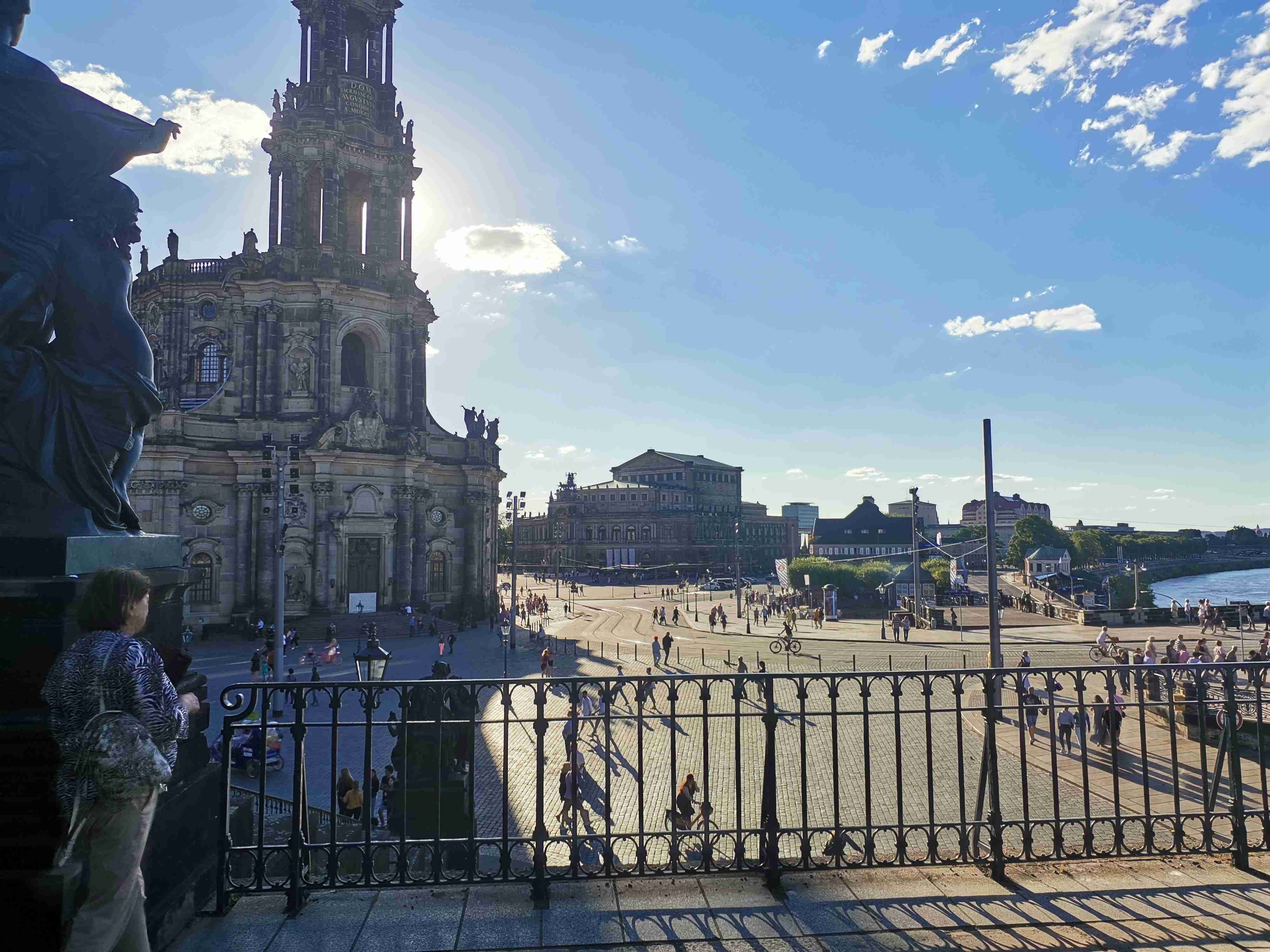
Dresden
Having been a capital of Saxony for centuries, Dresden city centre is a place filled with architecture with its insides available for public viewing. The main part of the city is located on the left bank of the river Elbe, where the Opera House, the Zwinger and the Residenzschloss are located. Not so far away there is the main square and the Frauenkirche.
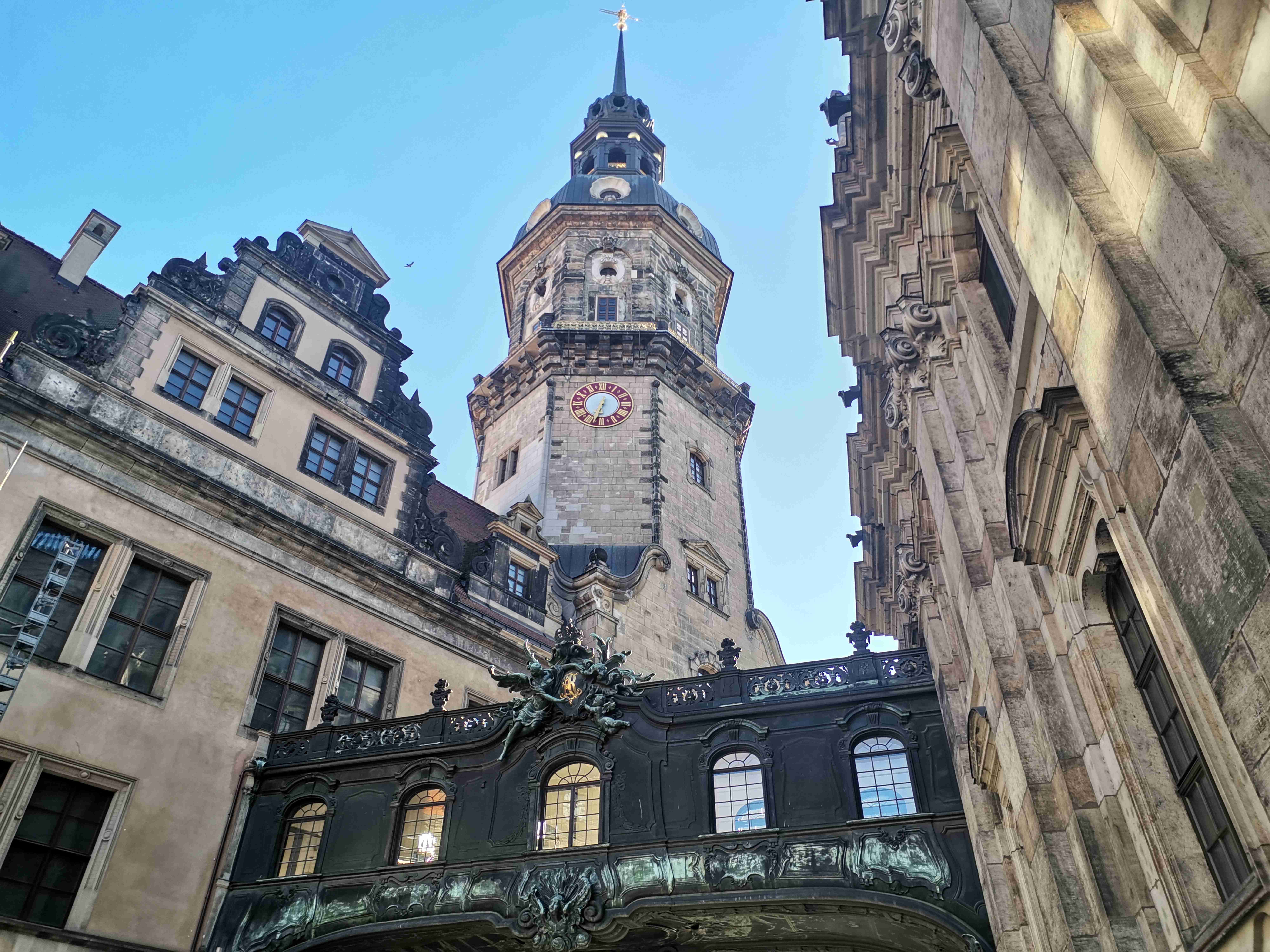
The sheer wealth of art
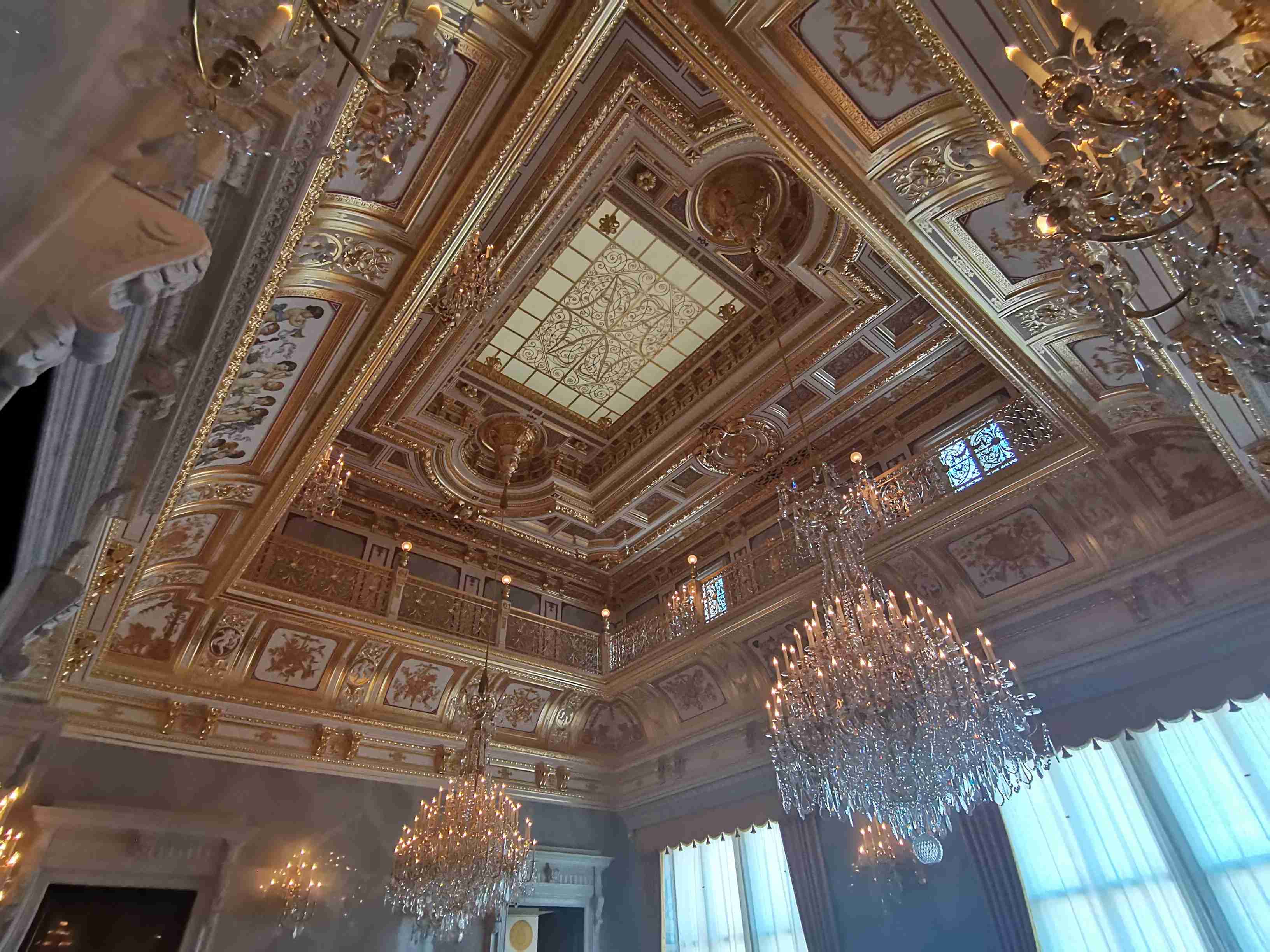
Take a look at one of the many interiors in the central buildings of Dresden. This serves as the testament for the wealth of the past. Two enormous chandeliers are hanging from the ceiling, intertwined with baroque, golden ornaments. Each wall, each floor and each ceiling has depth and detail, with meticulous attention to the overwhelming symbolica of the reign of the Saxon kings. Gold and white are the main colours of each room, with all the other colors, shapes and surprises serving by providing rythm and pacing to lead the eye through the exposition.
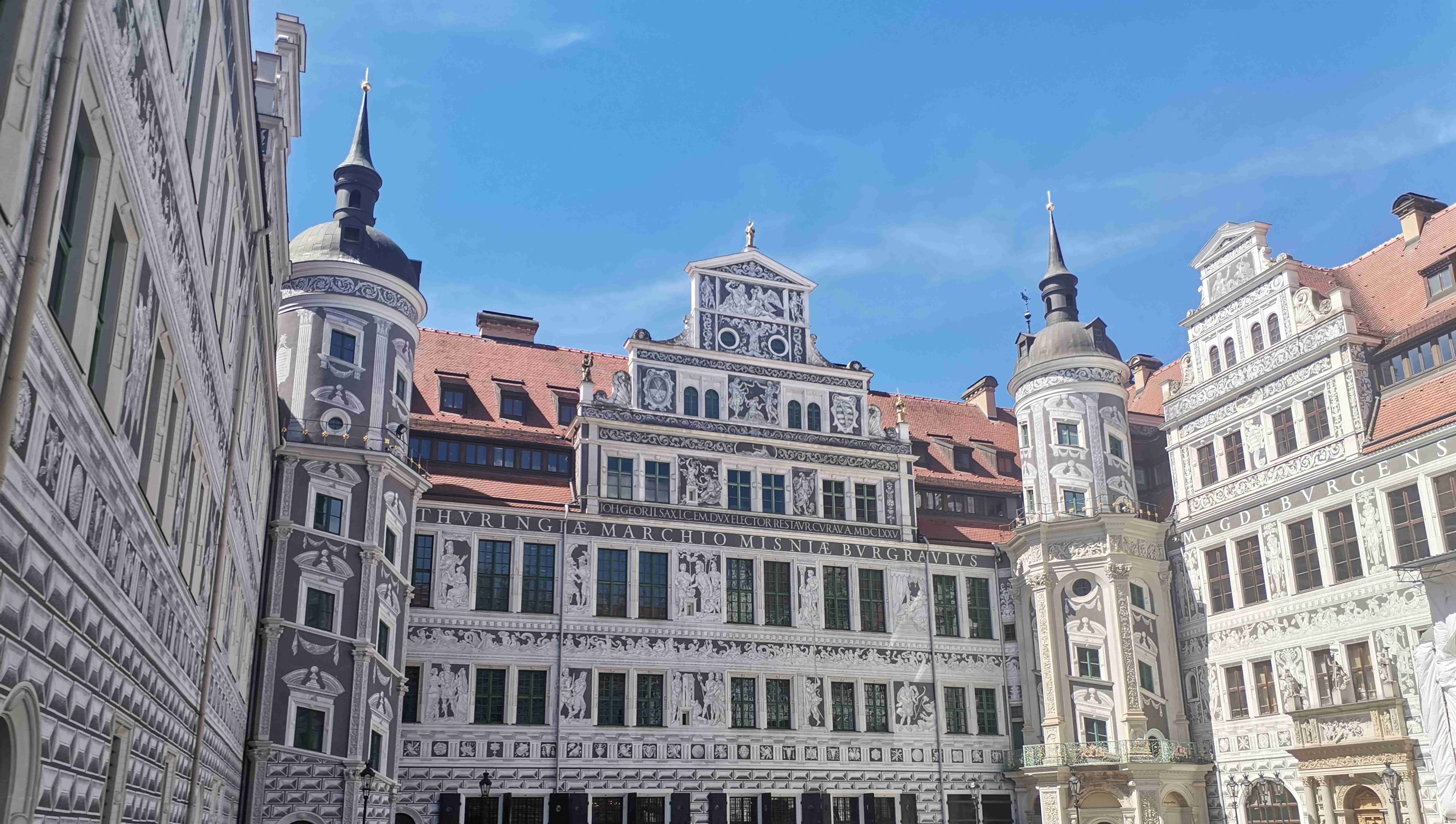
The museums of Dresden
The museums of Dresden have formed an organization called SKD (Staatliche Kunstsammlungen Dresden) which is a network of 14 city museums. They collect all their tickets under one price and provide online resources for every showpiece they have. Make sure you visit the online collection if you’re unable to visit the city in person, as they did a great job of digitizing their collection.
The museums of Zwinger
The Zwinger is a palace complex that houses a few museums. There is an art gallery, a museum of porcelain and a museum of mathematical and physical instruments. During my stay I visited all of them, however the whole outer part of Zwinger and its square were under renovation. Take a look at the maritime devices that allowed sailors to navigate the seas in the past.
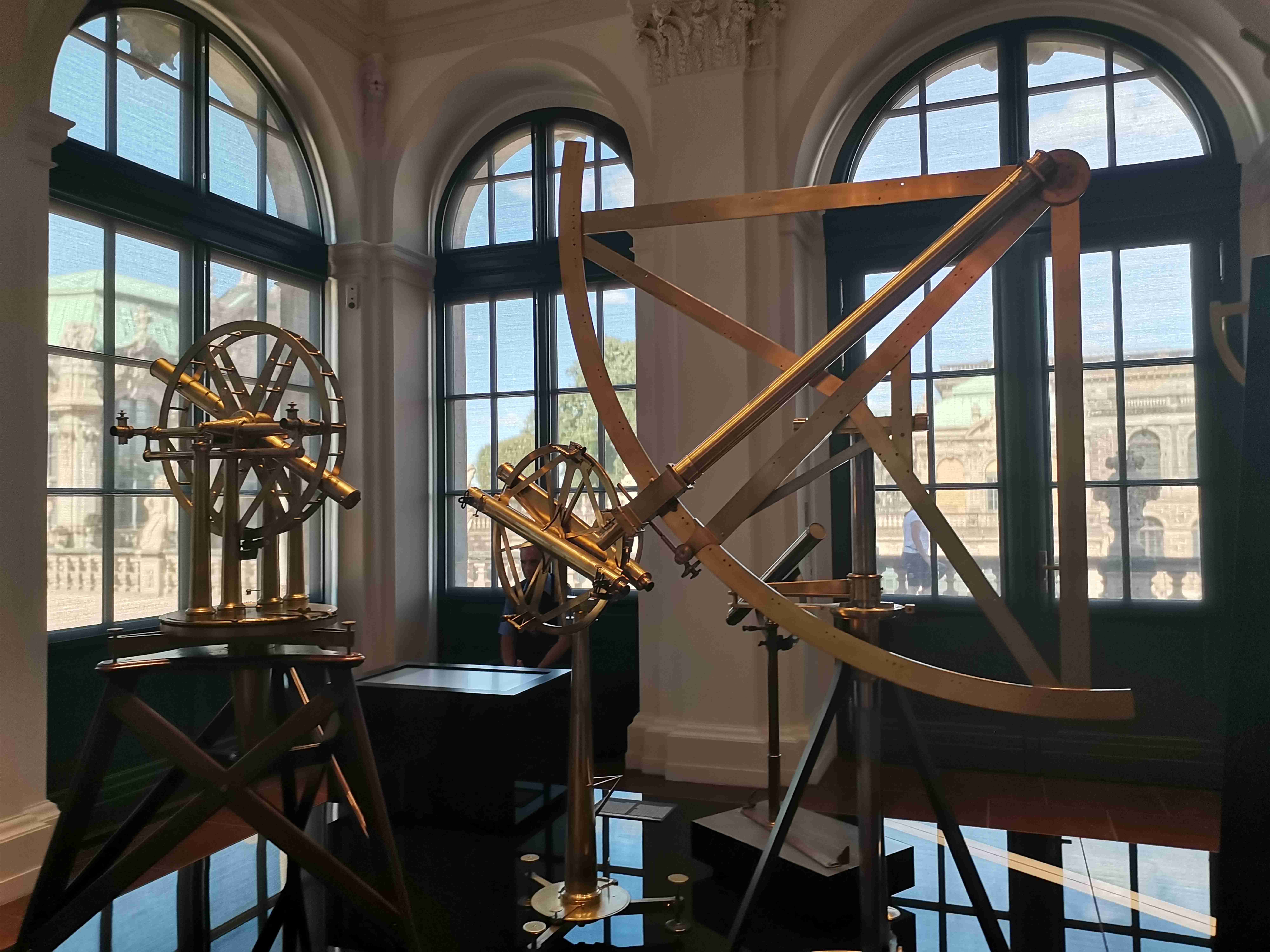
A sextant is a navigation instrument that measures the angle between two visible objects. It was used to measure the angle between an astronomical object and the horizon for the purposes of celestial navigation.
Vanitas is a recurring theme in art and philosophy. It uses symbols like skulls, hourglasses to remind of the transcience of life and the inevitability of death. The painting you see is a part of the collection of the Old Masters Picture Gallery.
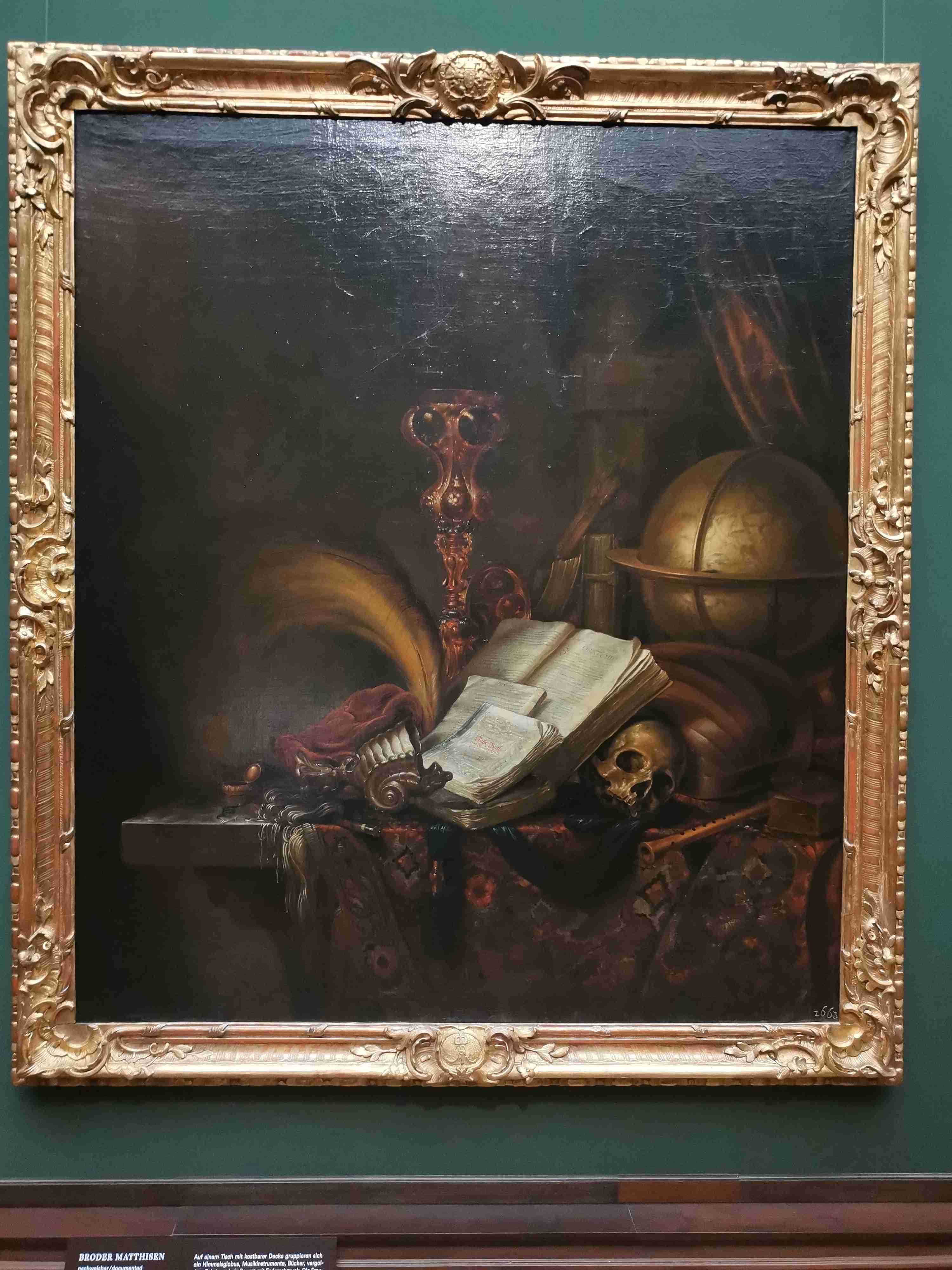
For further read about the painting refer to its online details.
The museums of Residenzschloss
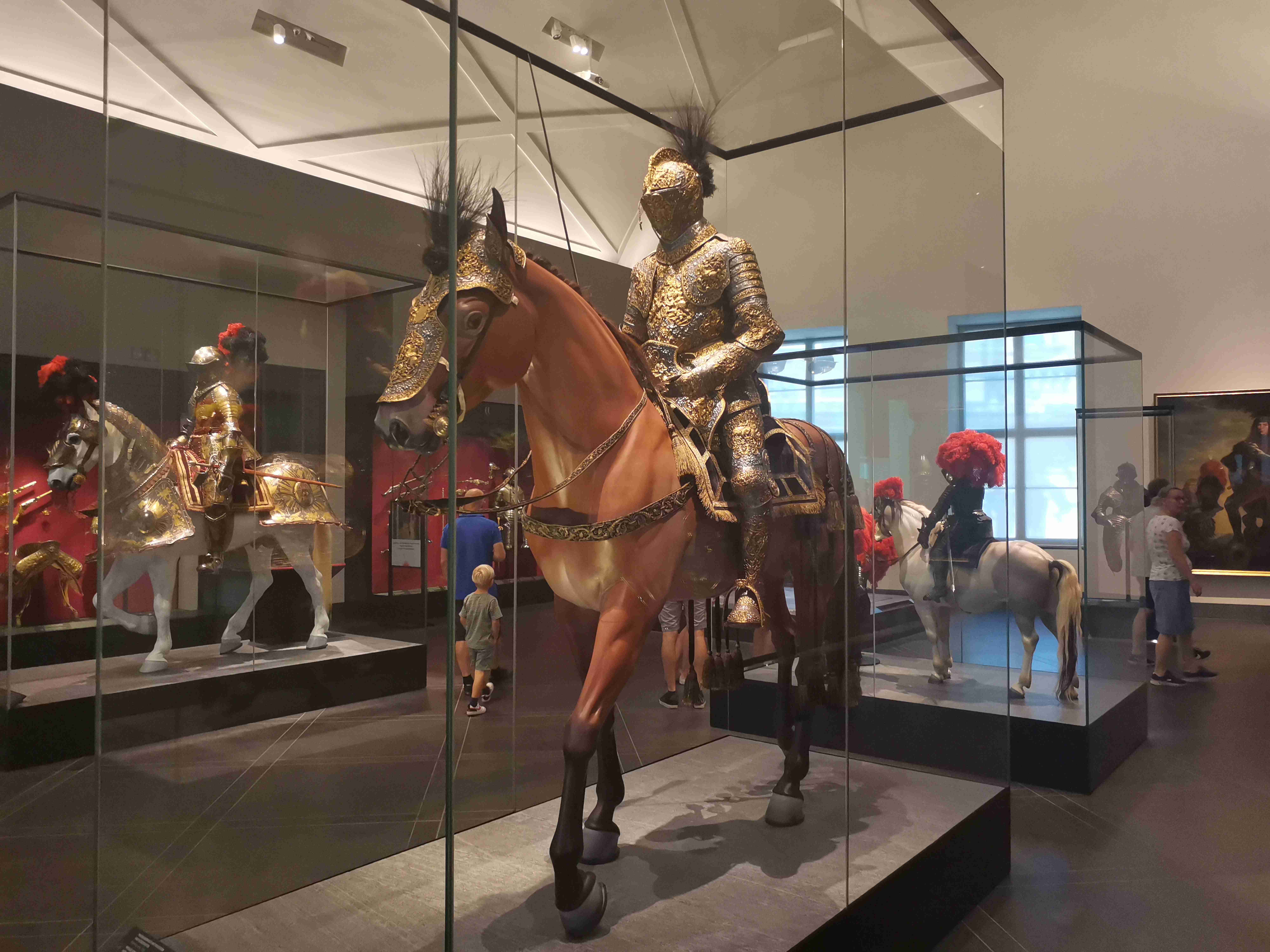
The royal palace of Dresden is a complex of four museums. The Green Vault is a treasure chamber with a showcase of former wealth of the Saxon kings. Remember to book your tickets in advance, as there is a set amount of tickets available for each day. Apart from the vault, there is a collection of weapons and armour such as the knight’s armour you see on the photo. The number of rooms and their scale accounts for a serious few hours of sightseeing.
The striking number of unique art
Not only was I astonished by the sheer scale of the collection, but also by the number of unique pieces of art. Take a look at the winemen, a set of porcelain figurines made in the 18th century. I used my very best to portray the detail, however with my best phone macro lens I was only able to shoot a few of them, and one of these you see right down below.
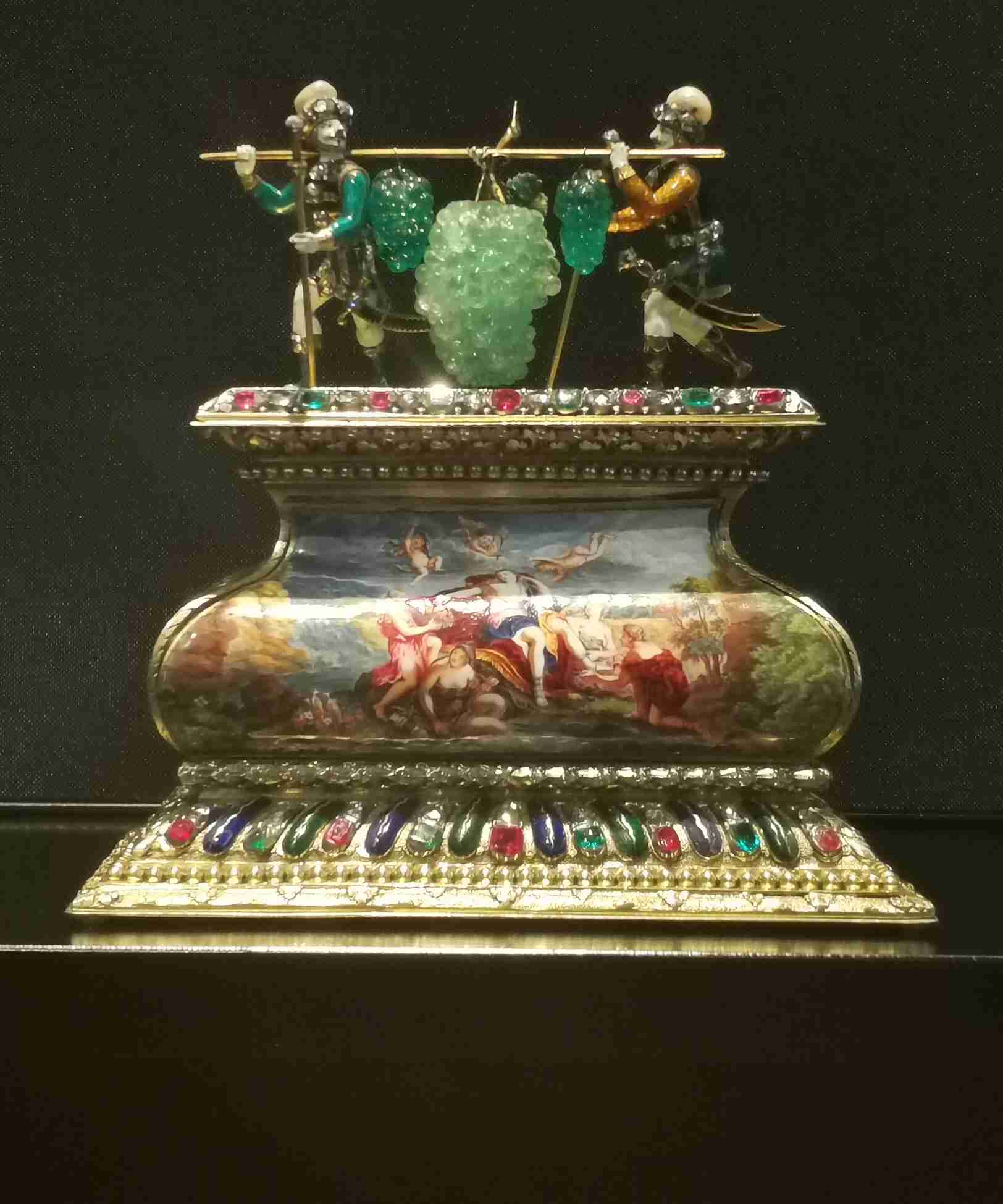
There are two figures on the top of a box carrying what appears to be freshly harvested grapes. They have the faces of mice, and they both carry weapons and wear hats. I was unable to find the reference for this piece online, but I am sure it is a part of the collection of Residenzschloss.
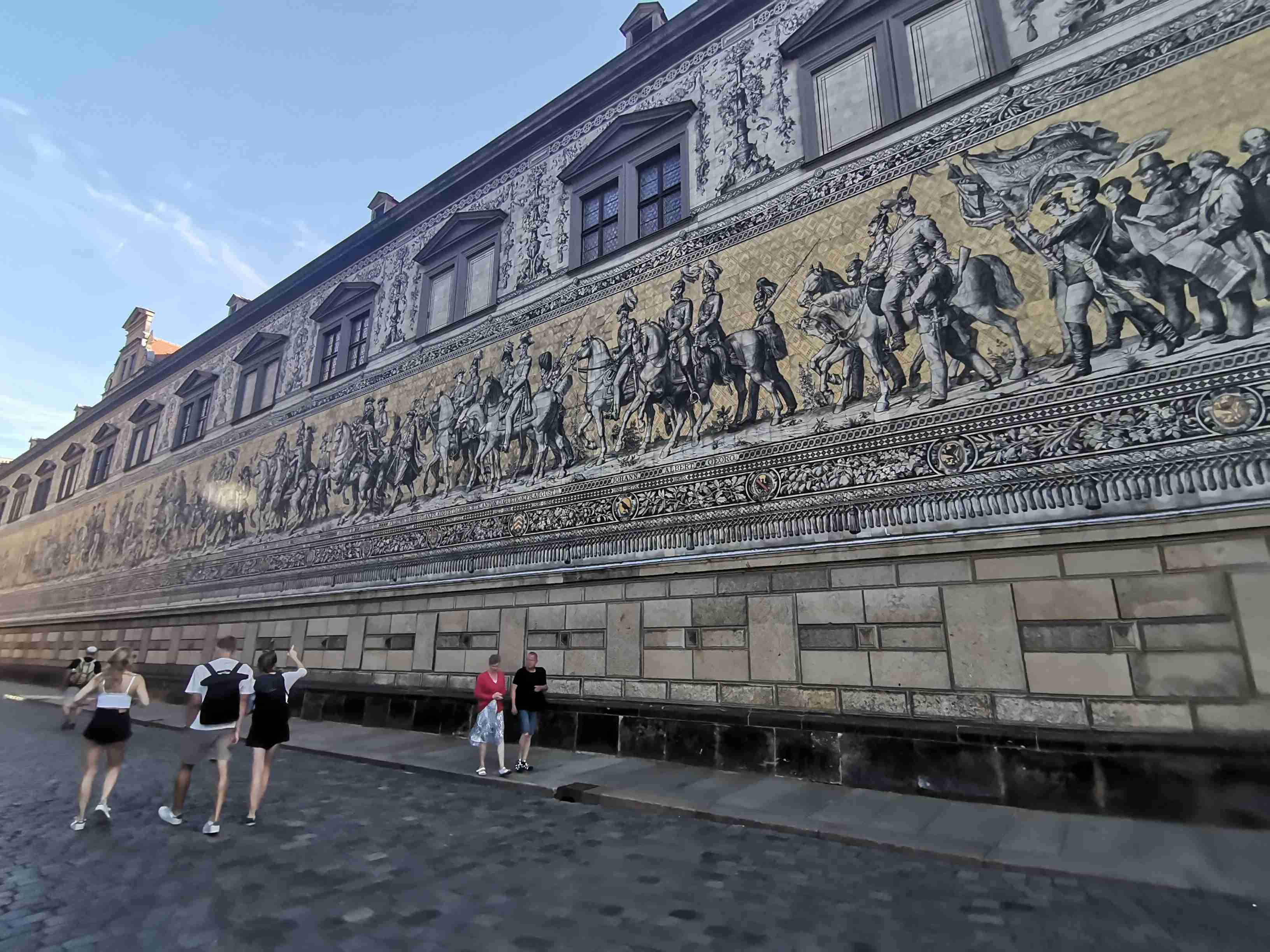
Outside of the palace there is a facade with the longest (102 meters long) procession I have ever seen. I left out few people on the photo for the sake of size comparison. The Fürstenzug, as it’s known in german, is a large mural made of porcelain tiles. It was created in 1876 to celebrate the 800th anniversary of the Wettin dynasty, and then replaced with meissen porcelain tiles during 1904-1907.
Frauenkirche
A quick walk over the city centre will take you to the Frauenkirche, near which there are many affordable restaurants and cafes. It is quite a sight to visit the inside of the church. The dome of white and gold is a masterpiece of baroque architecture and the whole church features a few enormous balconies spanning across the perimeter of the building.
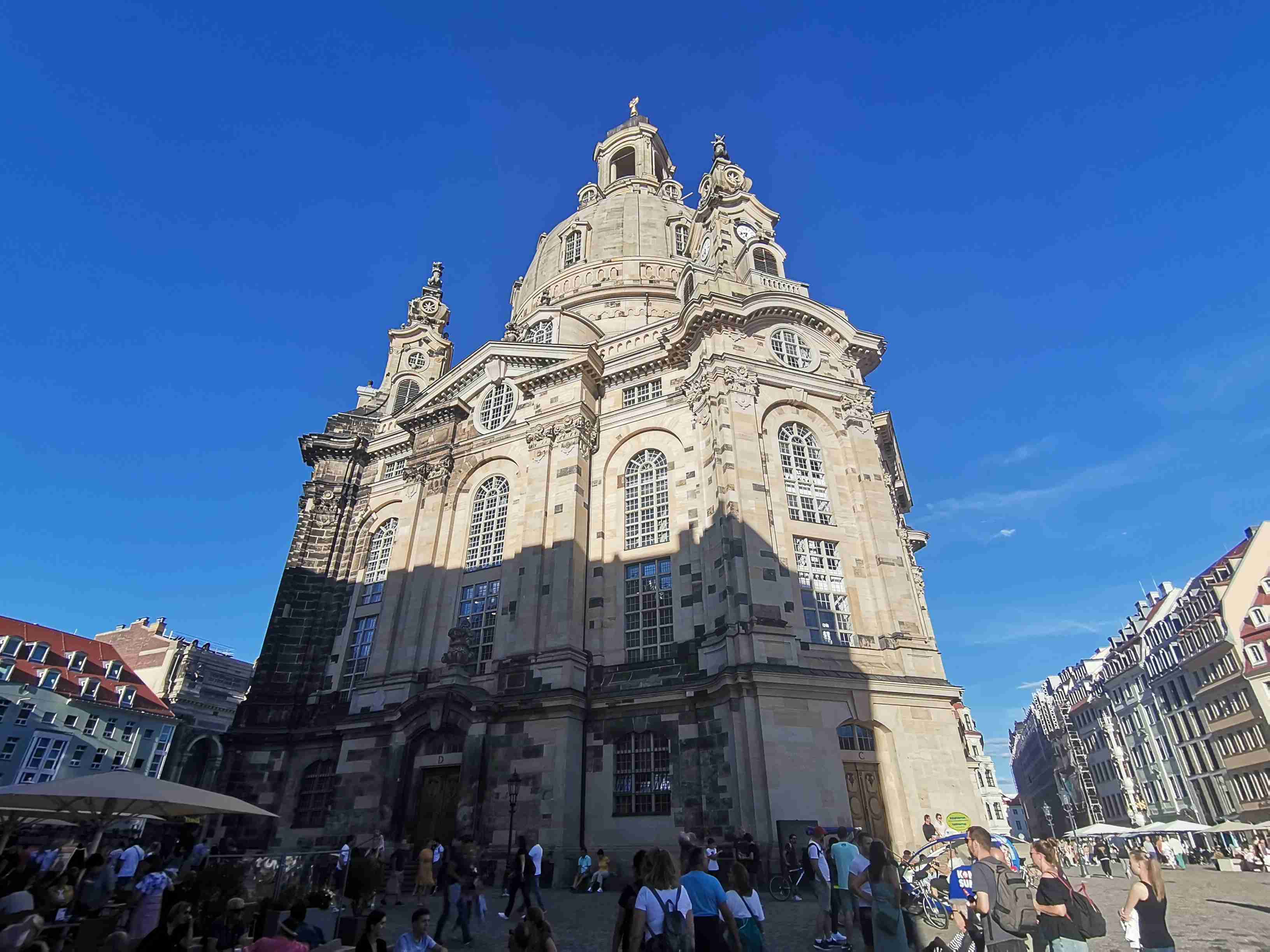
Dresden was a victim of carpet bombings at the end of the Second World War. The Frauenkirche you see on the photo was almost completely lost, but rebuilt in 2005. The dark bricks are the original ones left as a reminder of the destruction. The church is now a symbol of reconciliation and peace.