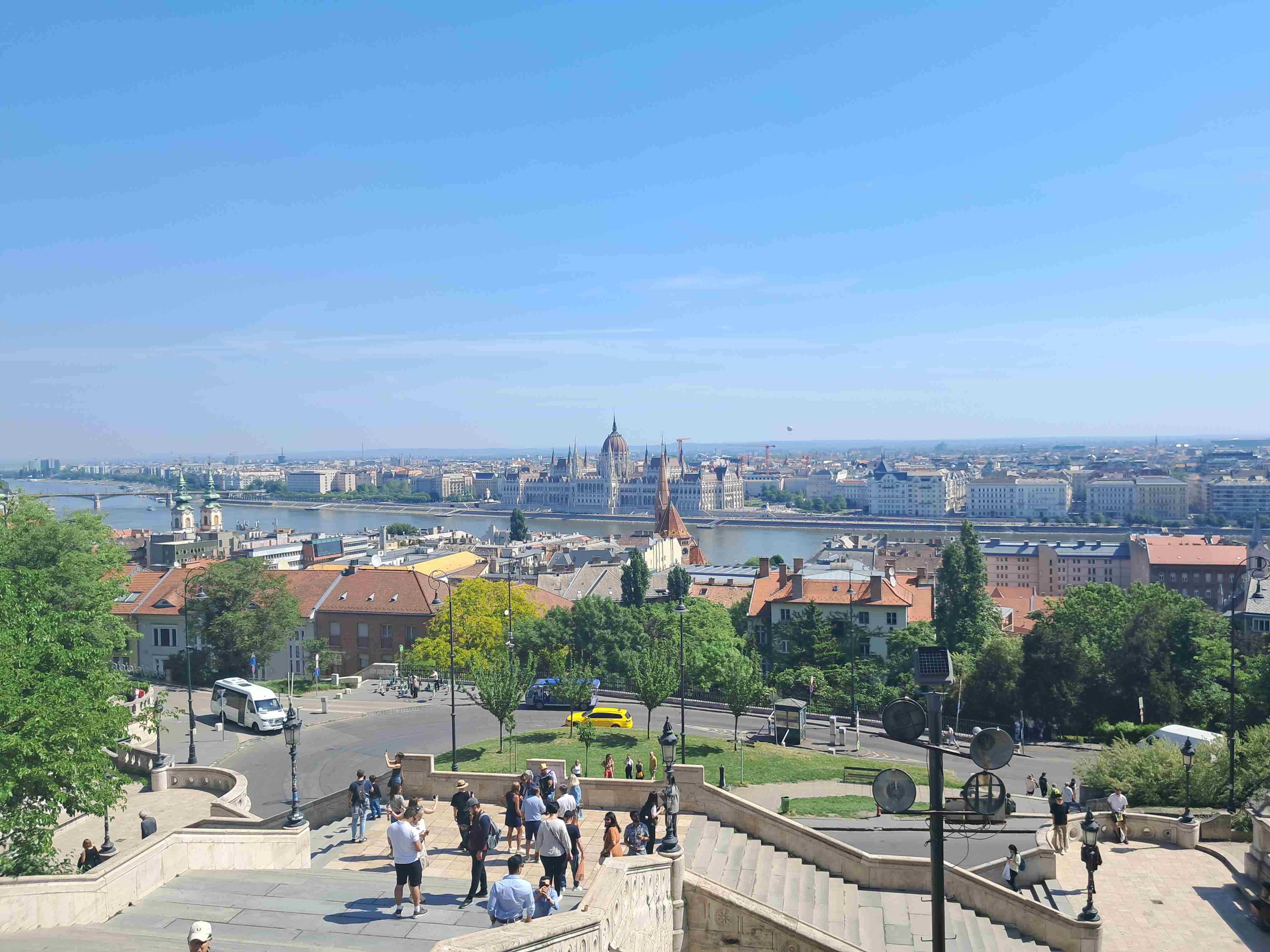
The Panorama of the city
A friend of mine once said Budapest is how Vienna would’ve looked like if only there was a hill on one side of the Danube river, and plains on the other one. Apart from the fact, that here they speak an incomprehensible language, there aren’t many differences between these two adjacent cities. Let’s enjoy the view as presented to a tourist on the stairs near the Fisherman’s Bastion.
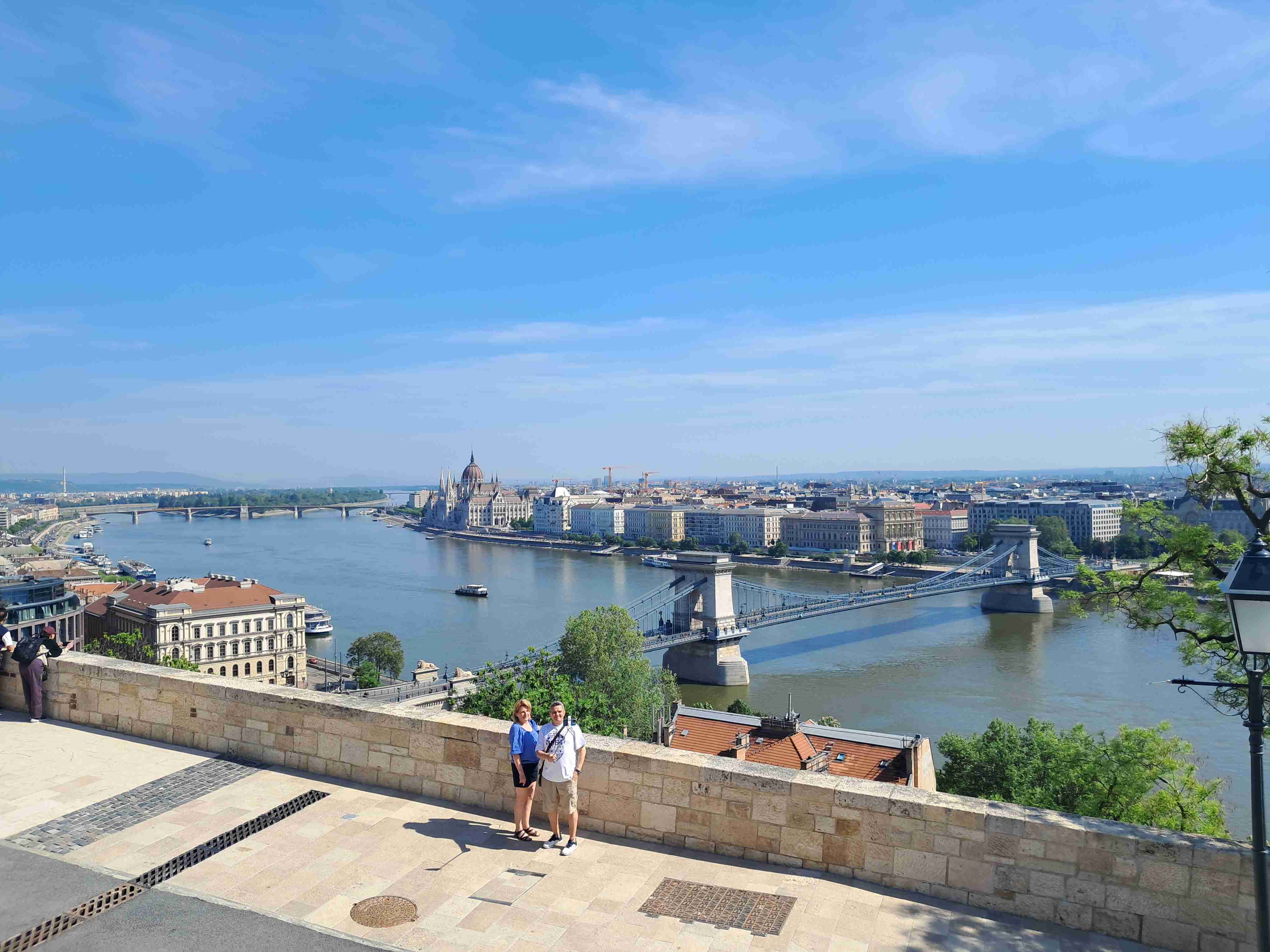
And here’s the same view, just a little bit to the right. The green island to be seen in the left side of the picture is a major recreational area for many to enjoy. Having been there I must say there were countless bikers, skaters and people just enjoying their free time. There’s also a Japanese garden at the verge of the island, a swimming pool complex, food stalls and a bar.
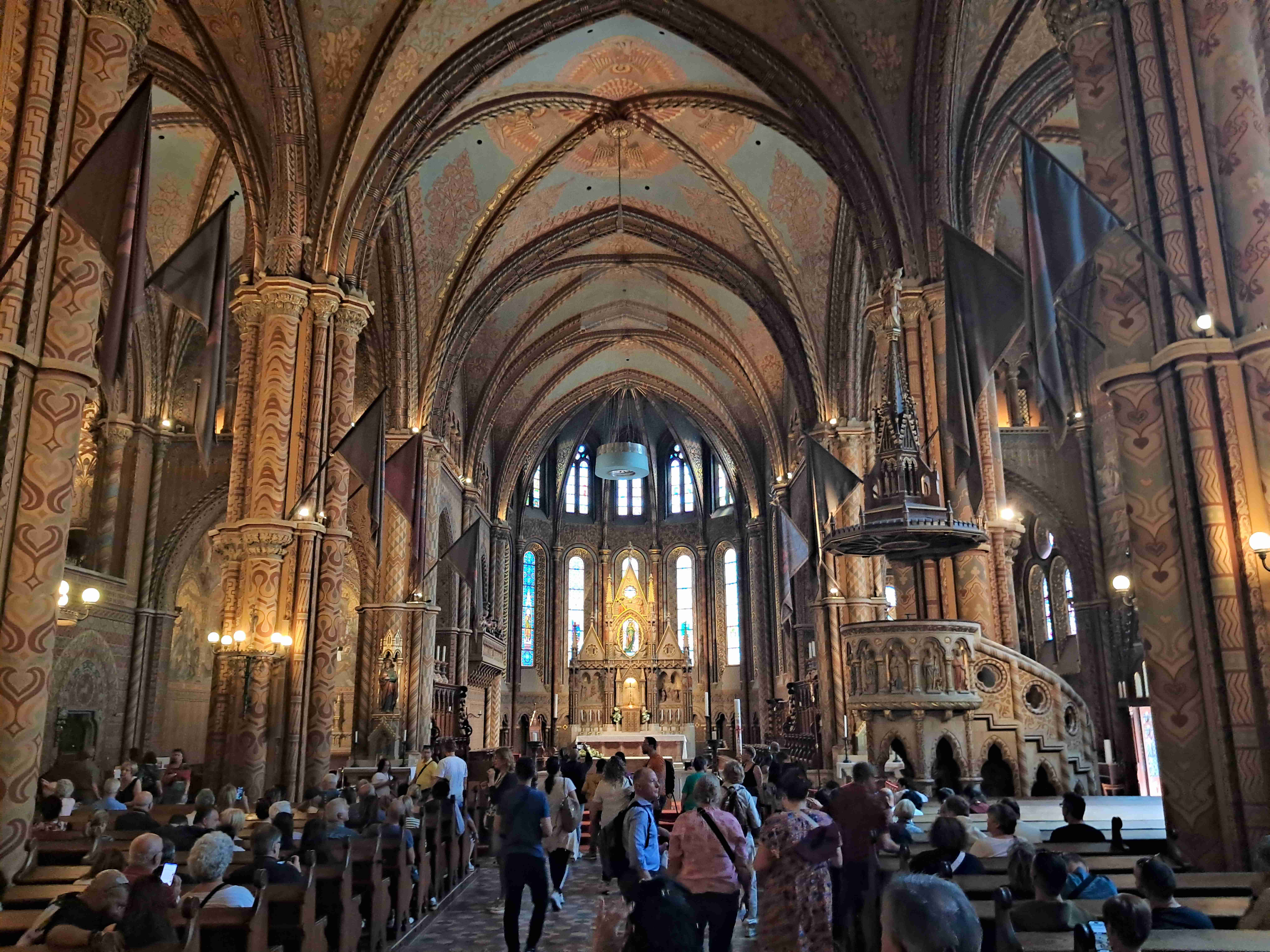
Matthias Church
Mátyás-templom, as it is called in Hungarian, is a place of worship for Christians, though for a certain period of time when Budapest was captured by the Ottomans, it was a mosque. It is to be seen by the colorful ornaments in the inside and a great tower (a minaret) on the outside.
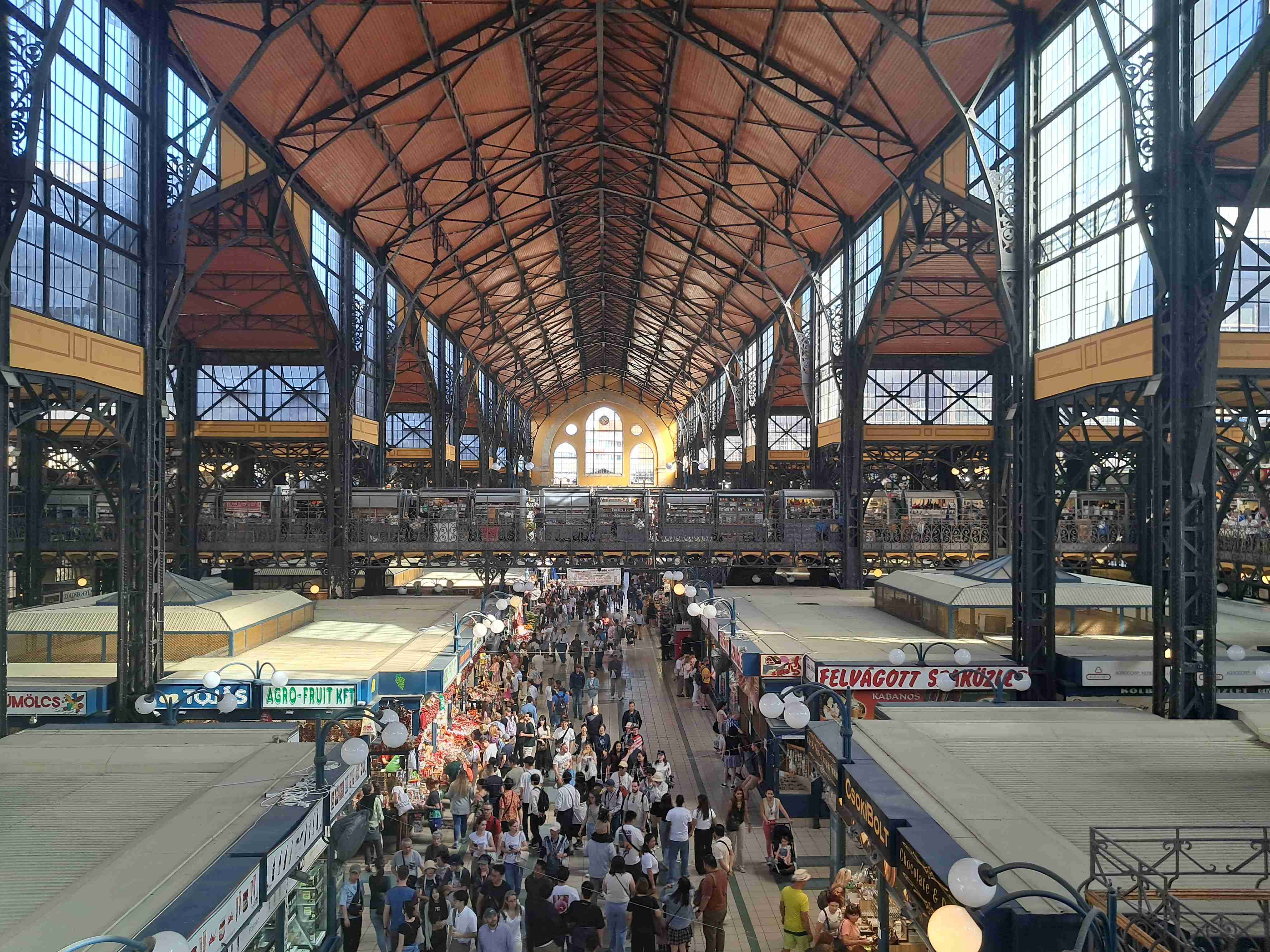
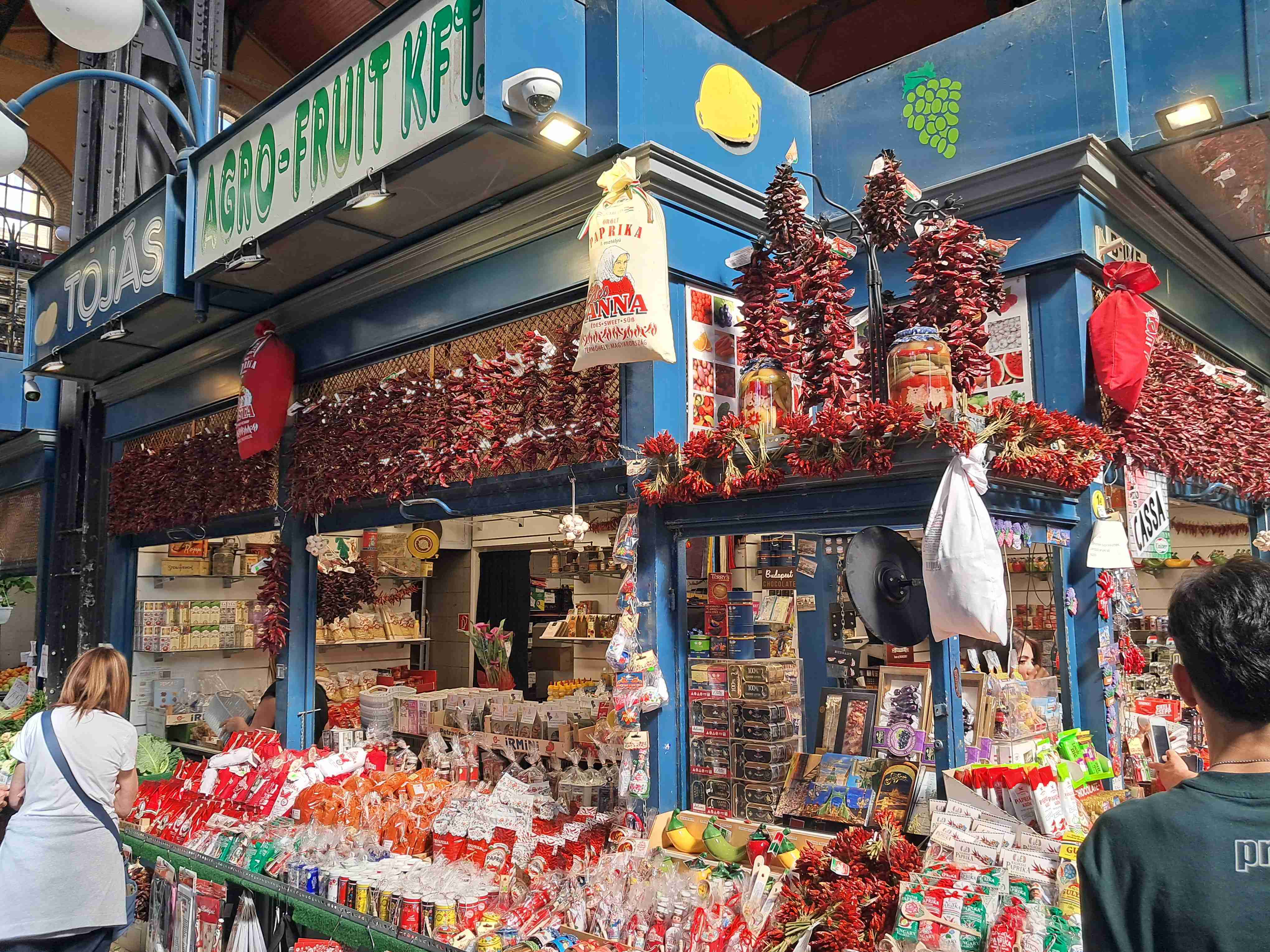
The Market Hall
This is by far one of the most basic places that provide tourists with great memories. Every souvenir imaginable can be bought in the great market hall. Ranging from food to clothing, the most welcoming stores are these with the local food - fresh meat, The Tokaj wine and spice selection. The same pepper paste can be seen at almost every stall, with prices varying by about 200 Forints.
The Cathedral
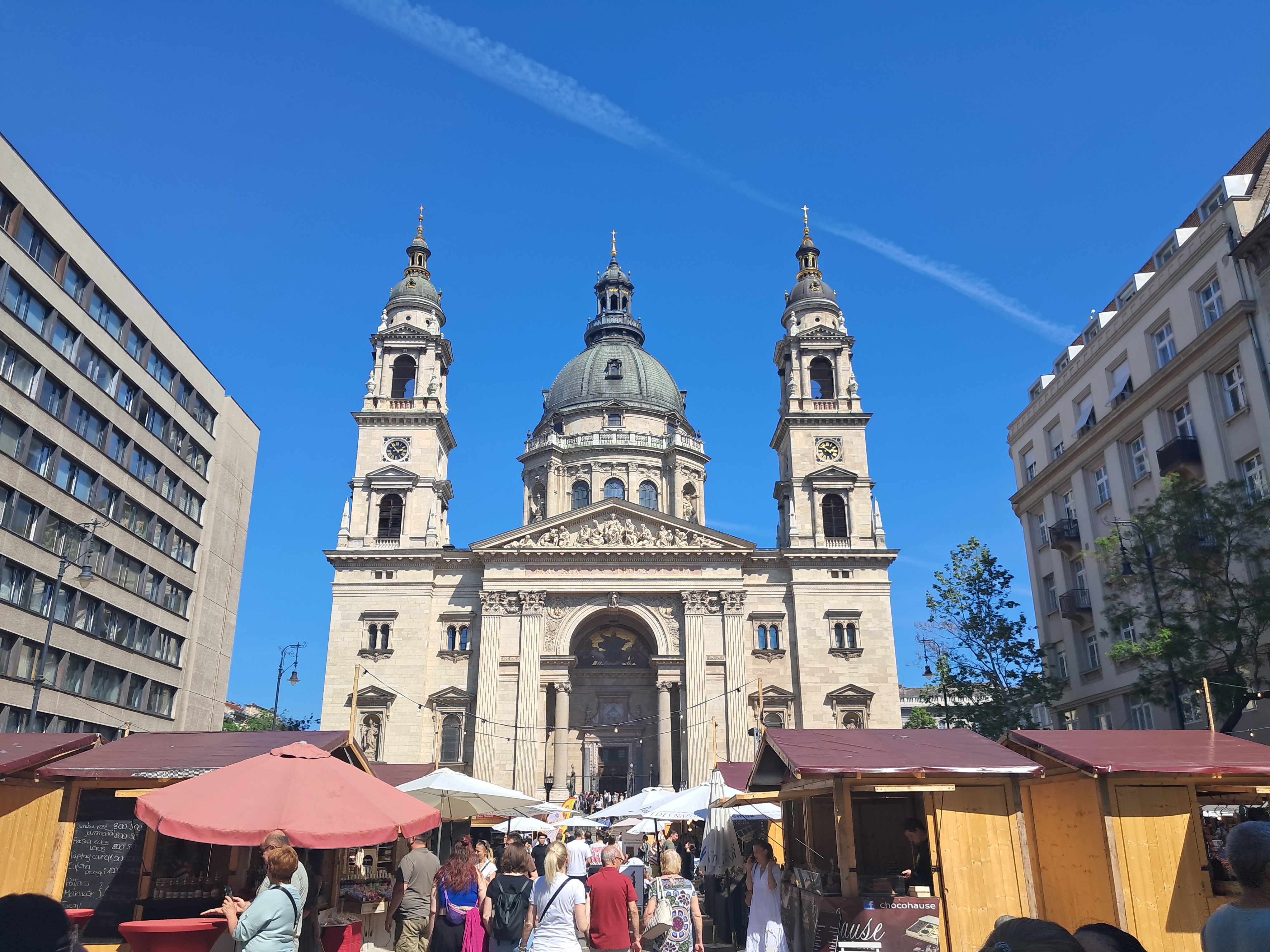
The Matthias Church presents itself on the top of a hill, in a representative region of Buda. However it is not the only major christian construction in the city. On the other side of the river, called Peszt, there is a cathedral in the close vicinity of the parliament. I specifically took a photo of the stalls near the cathedral, as I thought they share some similarities with Campo di Fiori in Rome, if only there was figure out of Assassin’s Creed in the centre of the square.
The Greenest Capital in Central Europe
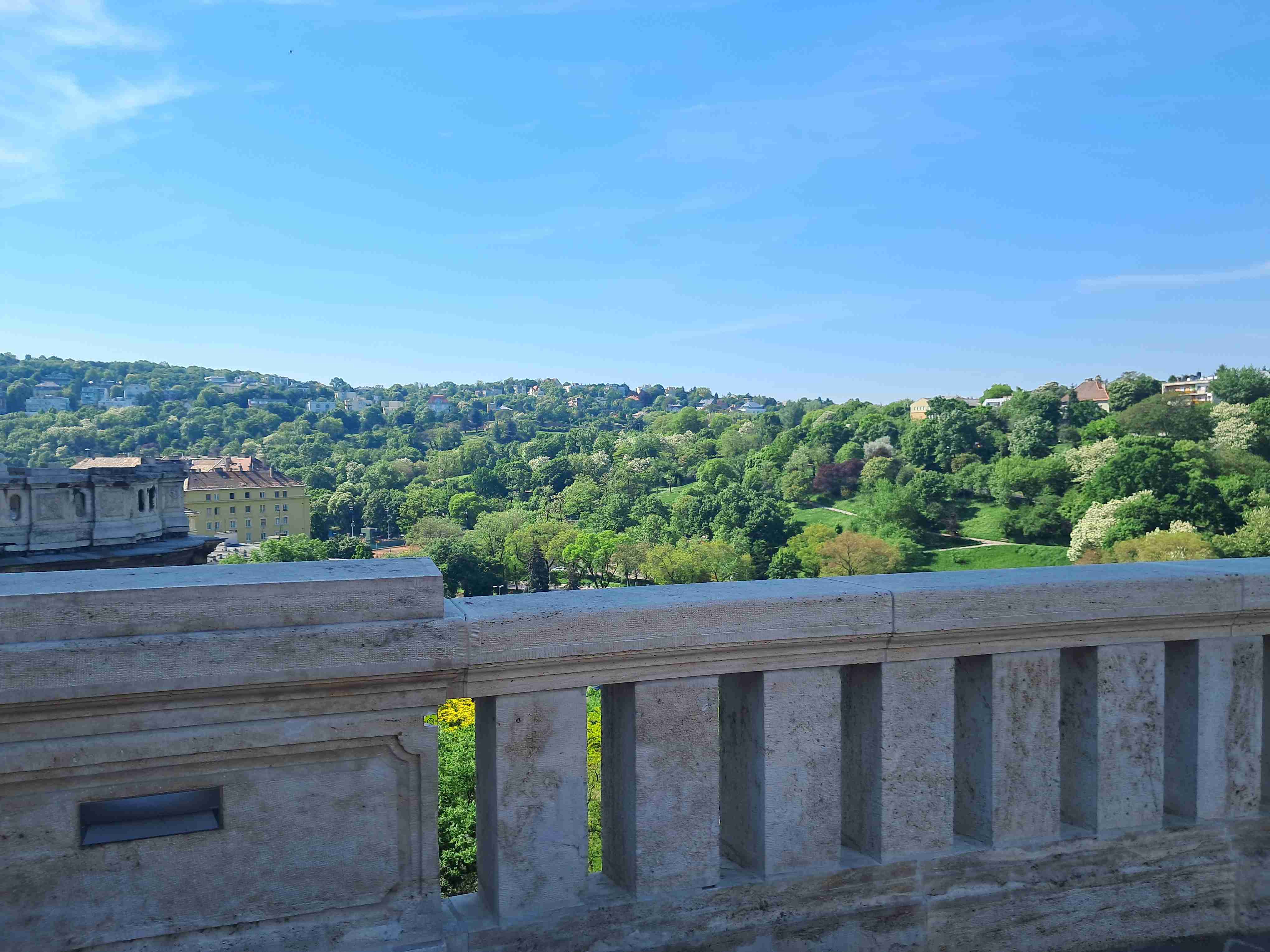
Almost unbelievable to comprehend how green their capital really is. Aside from the usual parks, which are present in every city, almost every major and minor street has trees on both sides, sometimes even in the middle. Almost each plot of land, excluding modern offices, has a fair amount of trees which combined with the already green streets provides an ubiquitous shade. During my visit there was a clear sky, and the temperature exceeded 30 degrees Celsius. Nonetheless it was surprisingly easy not to sweat, nor have any unpleasant experiences.
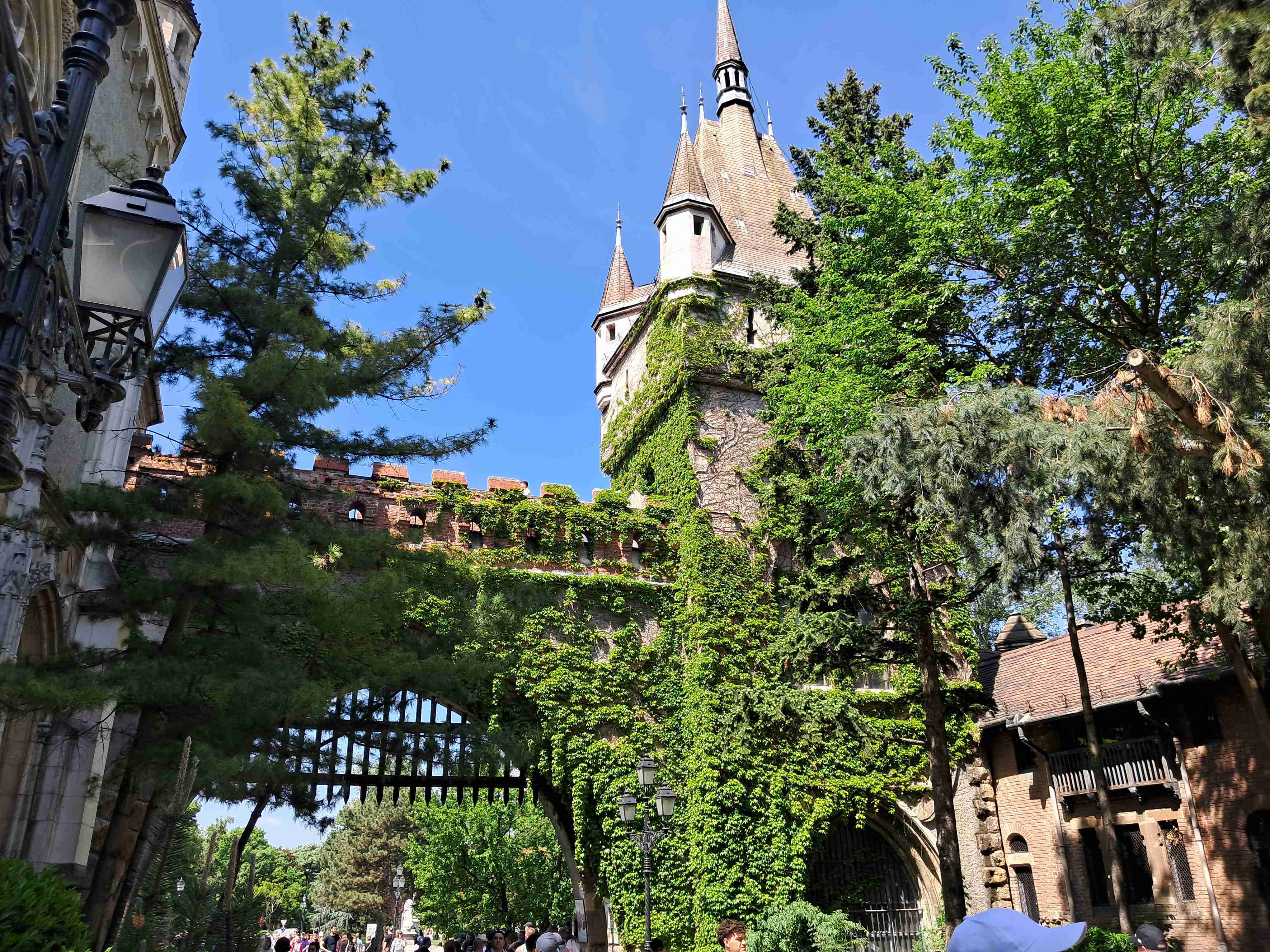
Varosliget is a beautiful park a further north from the centre, it is home to a castle and a museum - The Museum of Hungarian Agriculture. Take a look at these tower and a gate, straight out of a medieval fantasy book.
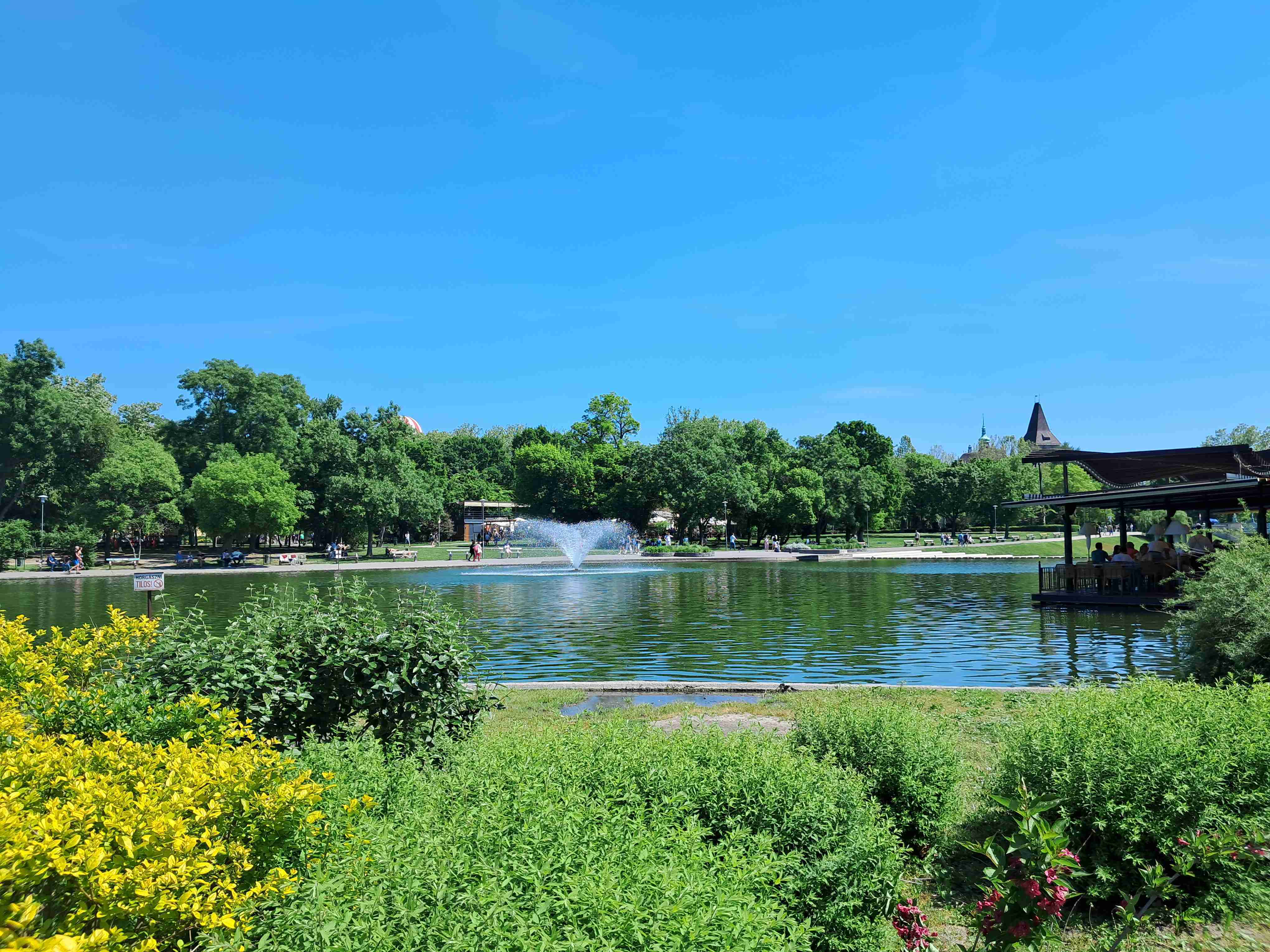
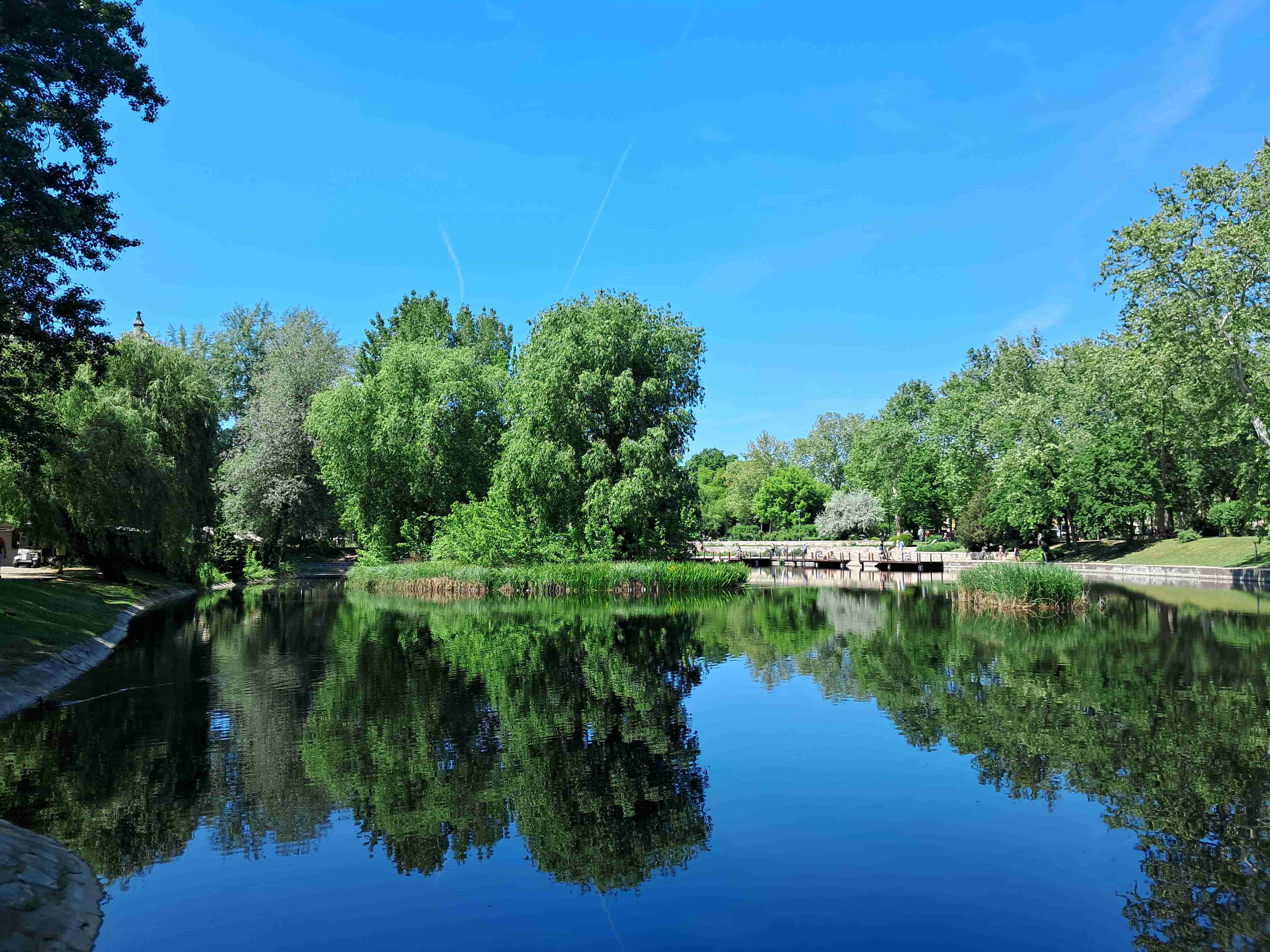
Further exploration of the park yields a public swimming pool, and a pond. It helped me regain my power to visit the rest of the city.
Gothic Architectural Influence
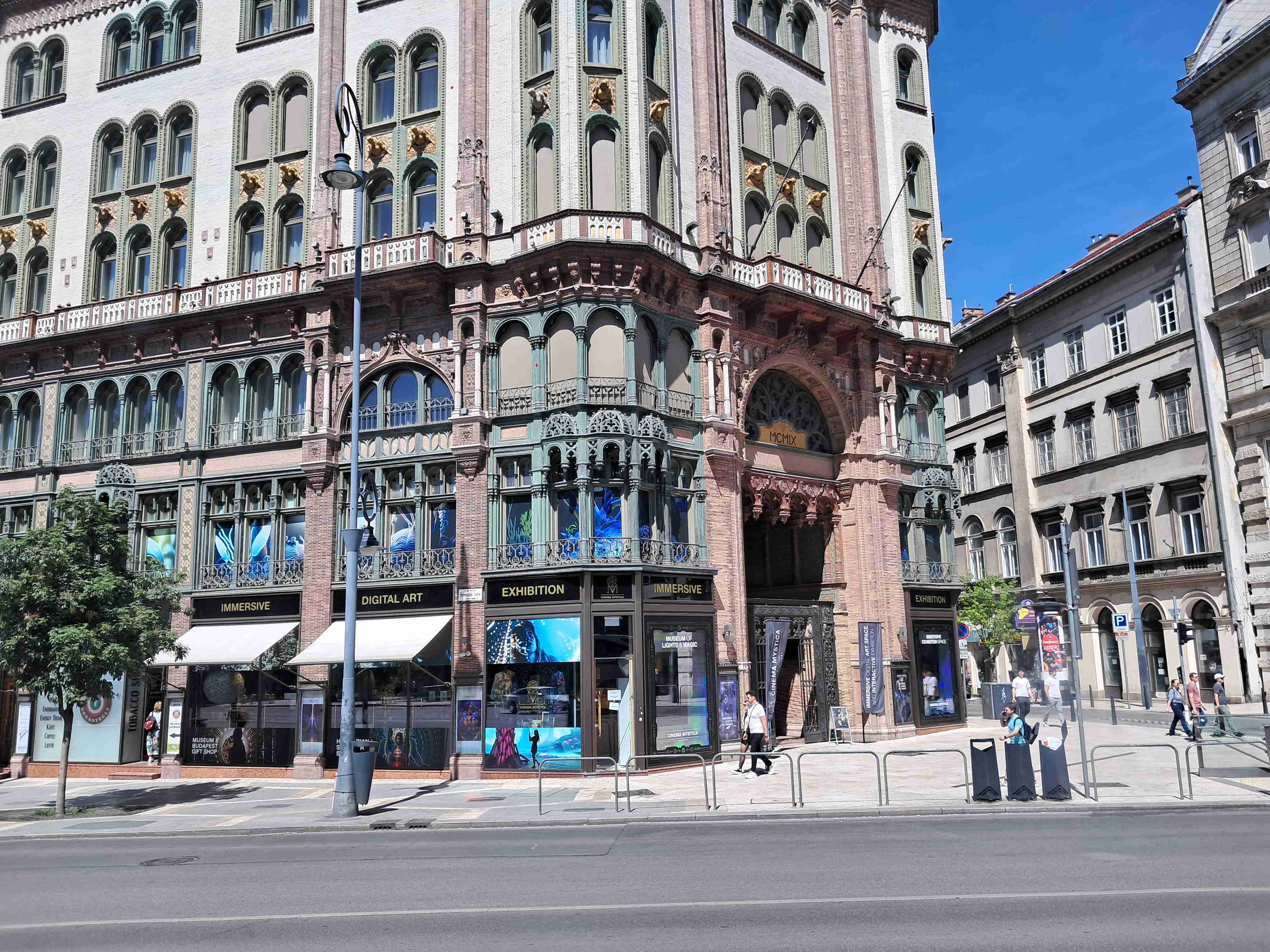
The tour guide I’ve had an opportunity to meet in Budapest pointed out the distinct features of the Gothic architecture: the famous arches, ribbed vaults, and flying buttresses. The coexistence of Austrian and Transylvanian styles creates a unique blend of intricate details in combination with golden baroque.
The Capital, especially in combination with the GDP per capita statistics paints out a clear picture - it is a city for tourists, and a rather expensive one. The prices for almost every basic supply was about 50% greater than what I would’ve paid in Poland.
Historical Figures and Events
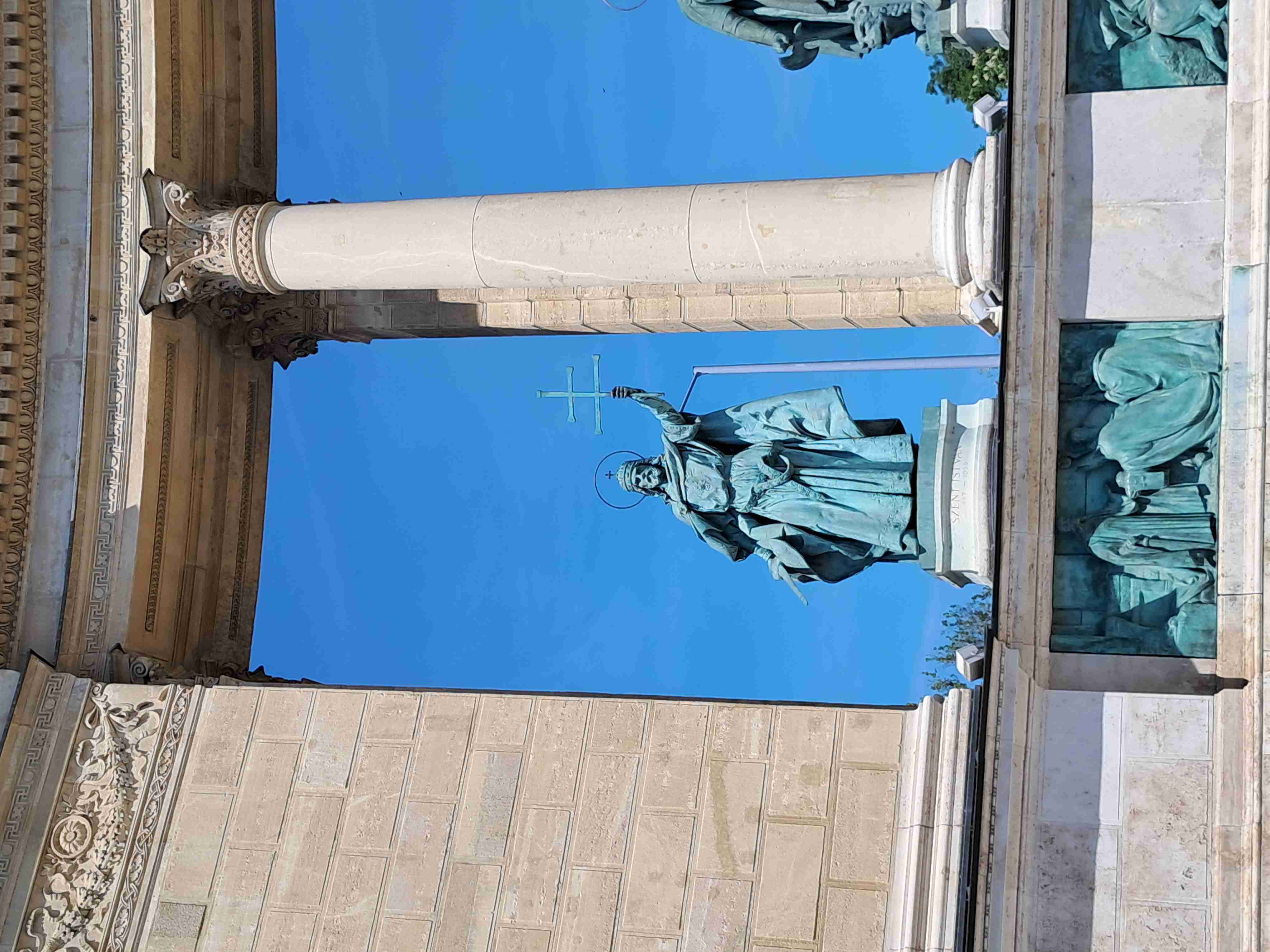
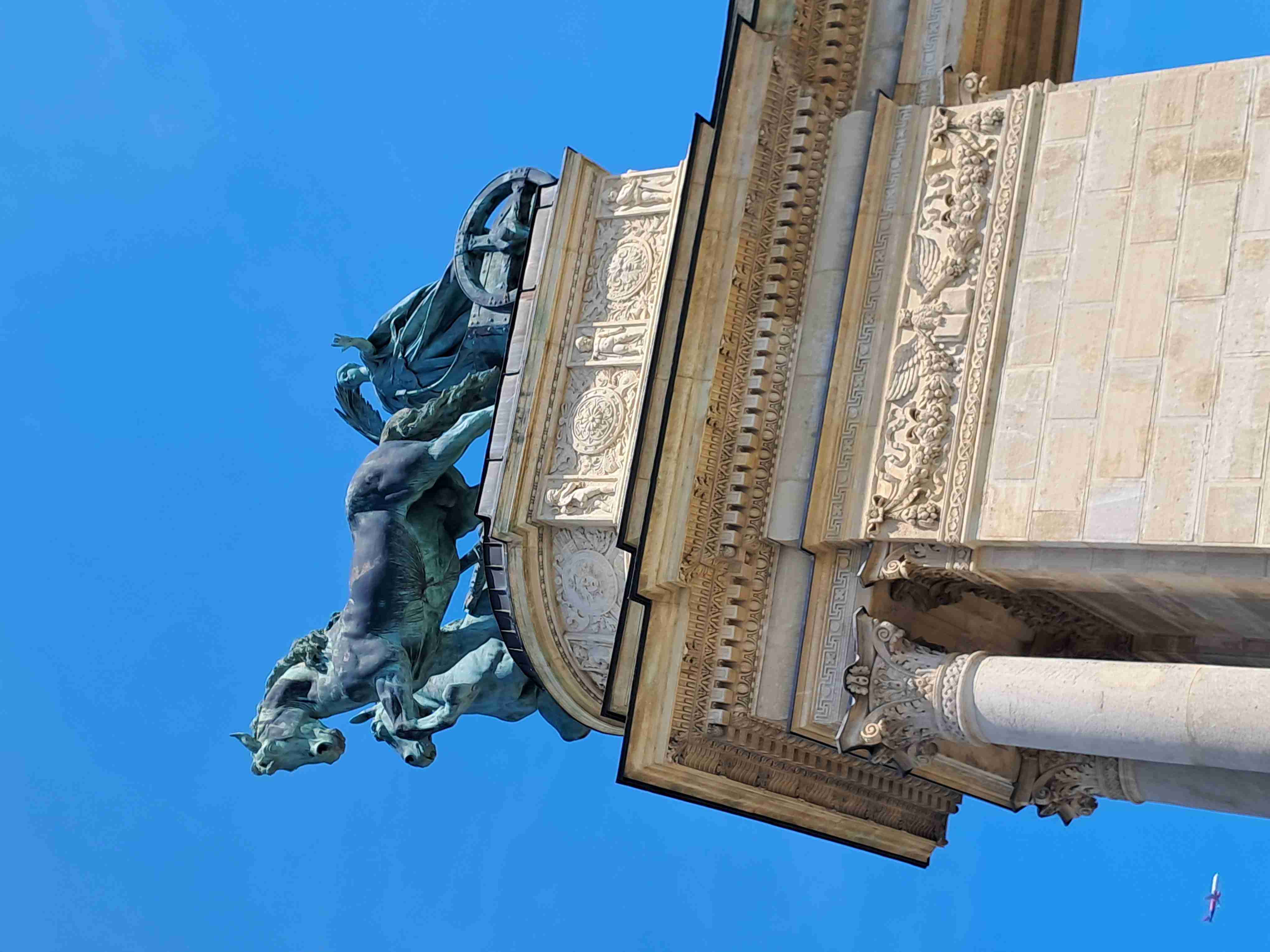
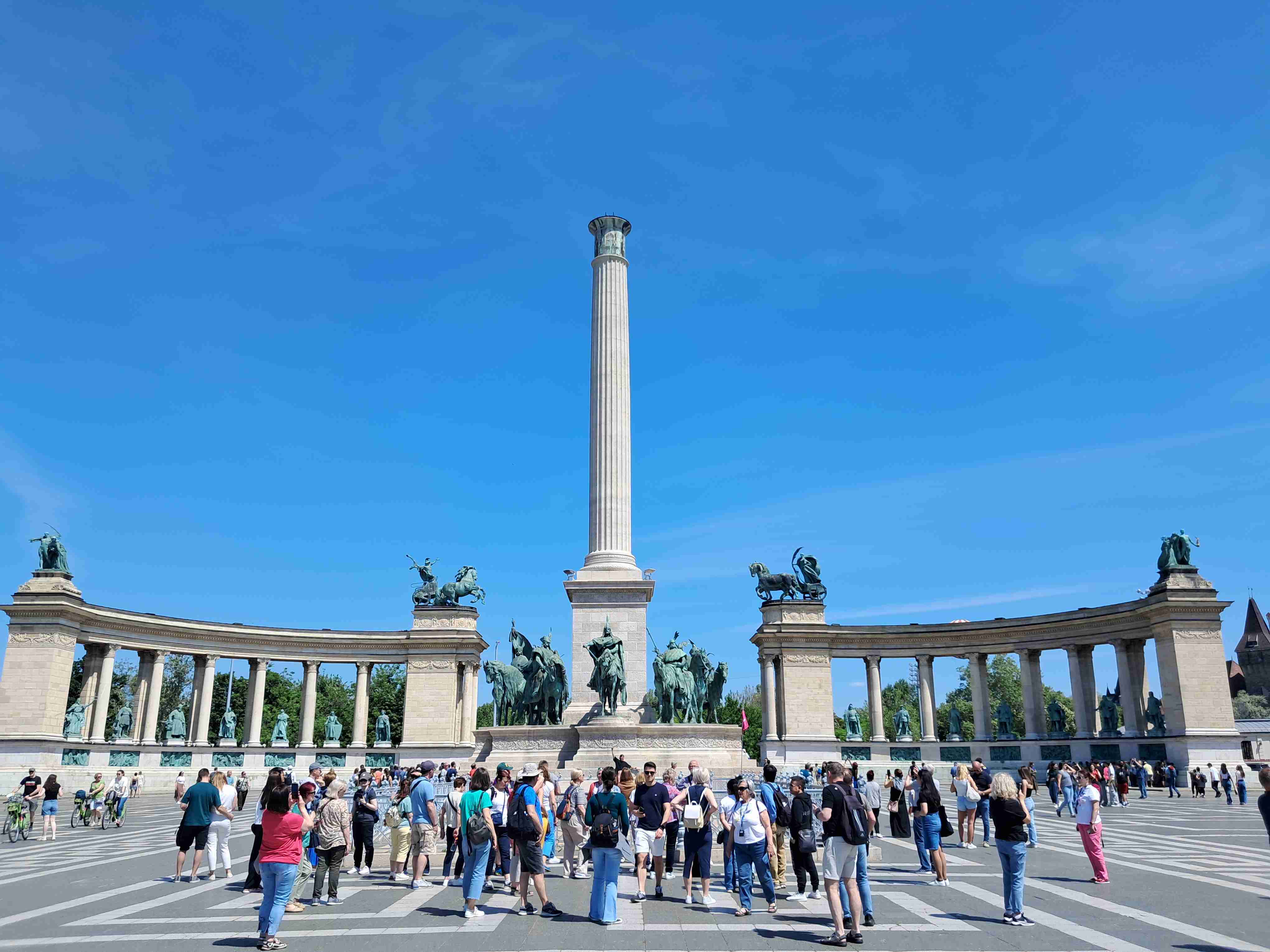
This significant monument portrays the most important Hungarian kings, including the founder of the country, St. Stephen. It is the only place in Budapest I felt uncomfortable because of the amount of tourists and the visible lack of trees.
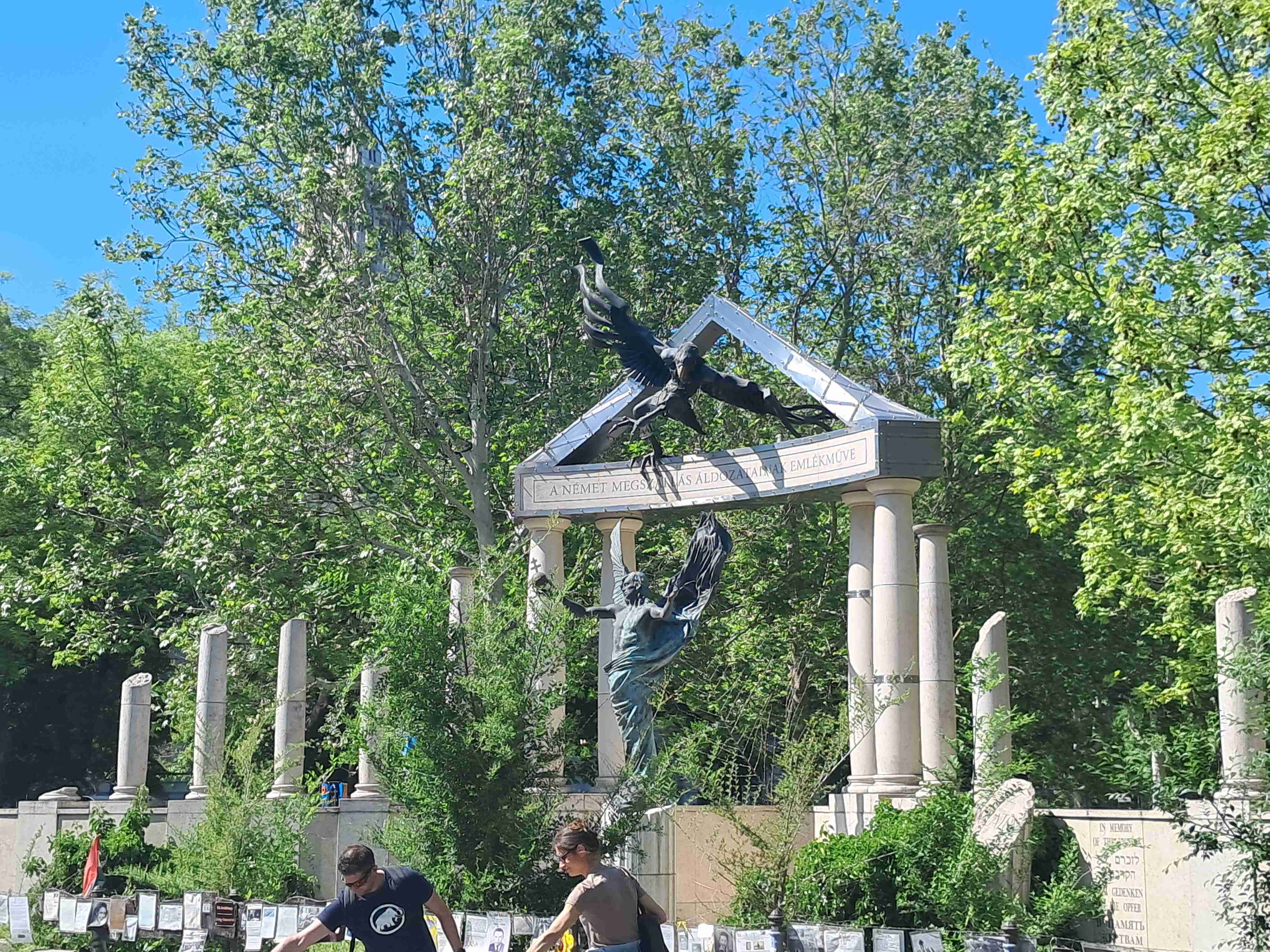
This monument of freedom, near the embassy of the United States, has been one of the more graphic representations of the recent history of Hungary. The inscription, written as a német megszállás áldozatainak emlékműve means: the monument to the victims of the German occupation. Figurative and vivid, the angel with its spread wings triumphs over the German Eagle.